


- Nyhedsfeed
- GÅ PÅ OPDAGELSE
- Sider
- Grupper
- Begivenheder
-
 Støt Socii.dk 💸



A Kiwi (New Zealander) by birth, I have worked, lived, and travelled widely around the world.
-
28 Indlæg
-
28 Fotos
-
0 Videoer
-
Bopæl Whangārei, New Zealand
-
Fra Auckland, New Zealand
-
Enke
-
27/02/1964
-
Følges af 5 brugere
Søg


© 2026 Socii.dk - Sociale medier (næsten) som du kender det. Dansk. Ejet af fællesskabet.
 Dansk
Dansk
Dansk
 English
Forsiden
-
Staff at the US embassy in Copenhagen have removed 44 flags decorated with the names of Danish soldiers that were killed in Afghanistan.
https://www.euractiv.com/news/us-embassy-removes-flags-with-names-of-fallen-danish-soldiers/Staff at the US embassy in Copenhagen have removed 44 flags decorated with the names of Danish soldiers that were killed in Afghanistan. https://www.euractiv.com/news/us-embassy-removes-flags-with-names-of-fallen-danish-soldiers/ 1 Kommentarer 0 Delinger 802 Visninger6
-
US Congresswoman Ilhan Omar sprayed with unknown substance at Minneapolis town hall
https://bit.ly/49JuO2e #usPolUS Congresswoman Ilhan Omar sprayed with unknown substance at Minneapolis town hall https://bit.ly/49JuO2e #usPol 1 Kommentarer 0 Delinger 2K Visninger
 -
Hello Kevin. Good to see someone from down under here on Socii. I hope you will like the site. Welcome.
PS I have visited NZ twice and I loved itHello Kevin. Good to see someone from down under here on Socii. I hope you will like the site. Welcome. PS I have visited NZ twice and I loved it 💚2 Kommentarer 0 Delinger 656 Visninger8
-
Earth’s Magnetic North Pole is not fixed like the geographic pole. For over four centuries, it drifted slowly from northern Canada toward Siberia, but during the late twentieth century its movement accelerated dramatically, reaching speeds of more than 50 kilometers per year.
Scientists link this rapid motion to changes deep inside Earth’s outer core, where flowing molten iron generates the planet’s magnetic field. Shifts in these powerful currents, particularly beneath Siberia, altered the balance of magnetic forces and pulled the pole faster across the Arctic.
Although the pace has recently slowed to about 35 kilometers per year, the movement still matters. Navigation systems, aviation charts, satellites, and even animal migration rely on accurate magnetic models. Updated data from agencies like NOAA and NASA help keep modern technology aligned with a planet that is constantly changing.
Source/Credit: Geomagnetic research; NOAA and NASA magnetic field studiesEarth’s Magnetic North Pole is not fixed like the geographic pole. For over four centuries, it drifted slowly from northern Canada toward Siberia, but during the late twentieth century its movement accelerated dramatically, reaching speeds of more than 50 kilometers per year. Scientists link this rapid motion to changes deep inside Earth’s outer core, where flowing molten iron generates the planet’s magnetic field. Shifts in these powerful currents, particularly beneath Siberia, altered the balance of magnetic forces and pulled the pole faster across the Arctic. Although the pace has recently slowed to about 35 kilometers per year, the movement still matters. Navigation systems, aviation charts, satellites, and even animal migration rely on accurate magnetic models. Updated data from agencies like NOAA and NASA help keep modern technology aligned with a planet that is constantly changing. Source/Credit: Geomagnetic research; NOAA and NASA magnetic field studies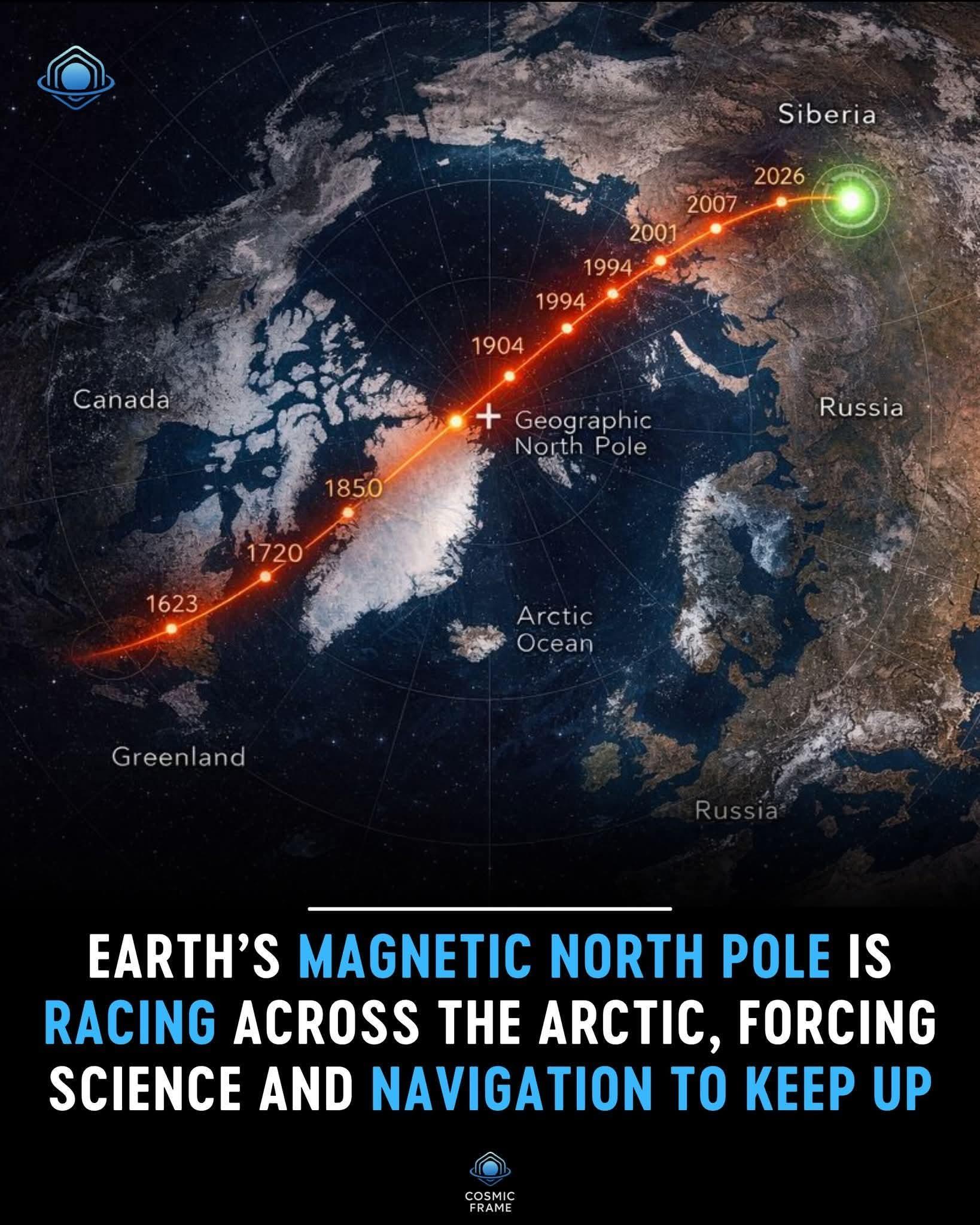 1 Kommentarer 0 Delinger 941 Visninger6
-
What makes this model extraordinary is that it’s not artistic imagination. It’s built from real measurements gathered through cryo-electron microscopy, X-ray crystallography, NMR, and biochemical data. Every structure is placed at roughly correct scale and density, showing how crowded a living cell actually is.
Textbooks often show cells as empty sacs with a few floating parts. In reality, a eukaryotic cell is packed edge to edge with proteins, ribosomes, membranes, cytoskeletal filaments, and molecular machines in constant motion. There is almost no free space. Everything is interacting, colliding, binding, and unbinding every second.
This kind of cellular landscape helps scientists understand how life works at the molecular level. How signals propagate, how energy flows, how errors happen, and how diseases disrupt normal processes. It also makes one thing very clear: even a single human cell is more complex than any machine we have ever built.
You’re not looking at a diagram of life. You’re looking at a compressed universe of chemistry, running nonstop inside every one of your cells, keeping you alive without you ever noticing it.What makes this model extraordinary is that it’s not artistic imagination. It’s built from real measurements gathered through cryo-electron microscopy, X-ray crystallography, NMR, and biochemical data. Every structure is placed at roughly correct scale and density, showing how crowded a living cell actually is. Textbooks often show cells as empty sacs with a few floating parts. In reality, a eukaryotic cell is packed edge to edge with proteins, ribosomes, membranes, cytoskeletal filaments, and molecular machines in constant motion. There is almost no free space. Everything is interacting, colliding, binding, and unbinding every second. This kind of cellular landscape helps scientists understand how life works at the molecular level. How signals propagate, how energy flows, how errors happen, and how diseases disrupt normal processes. It also makes one thing very clear: even a single human cell is more complex than any machine we have ever built. You’re not looking at a diagram of life. You’re looking at a compressed universe of chemistry, running nonstop inside every one of your cells, keeping you alive without you ever noticing it.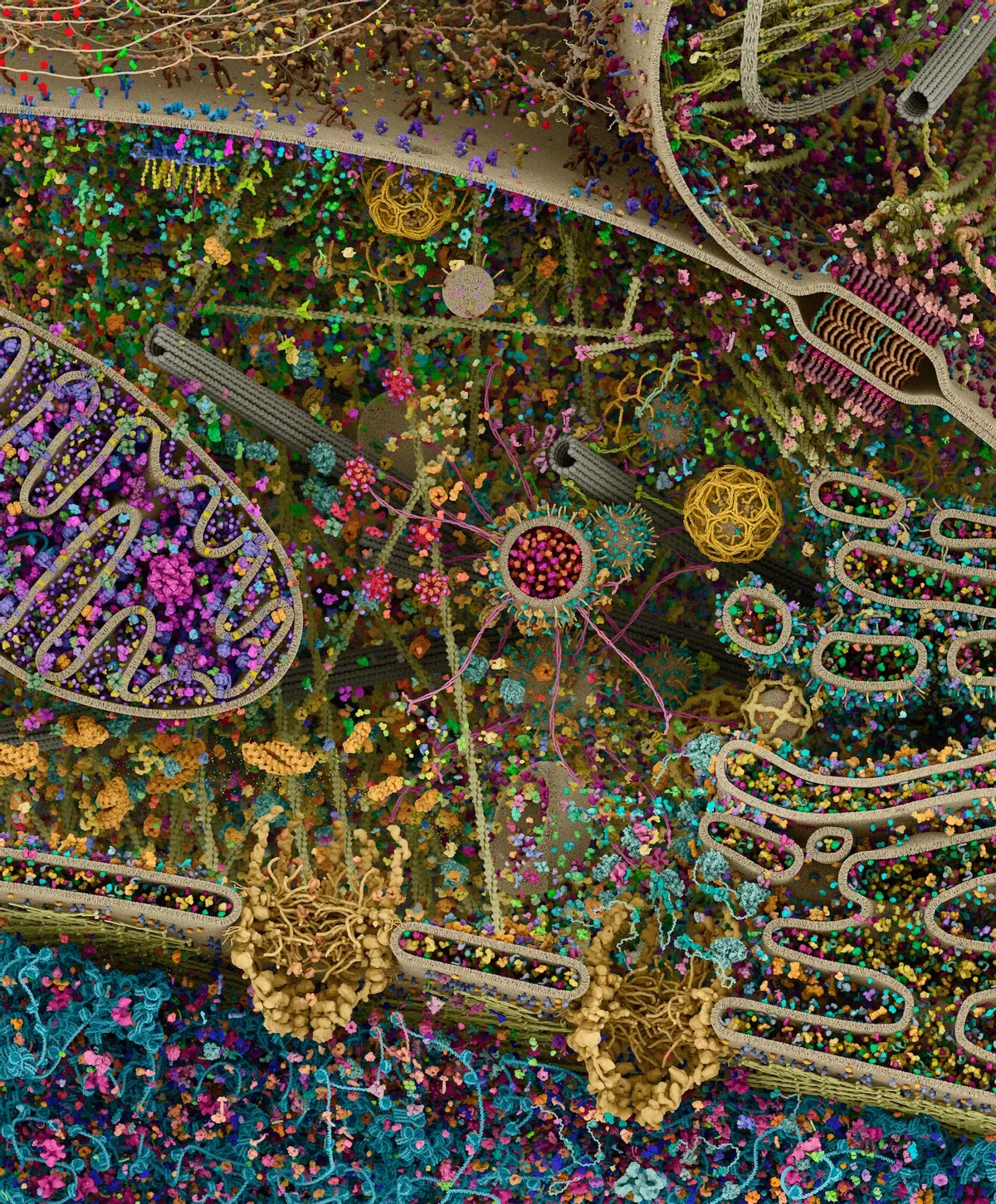 1 Kommentarer 0 Delinger 995 Visninger
2
1 Kommentarer 0 Delinger 995 Visninger
2






Flere historier